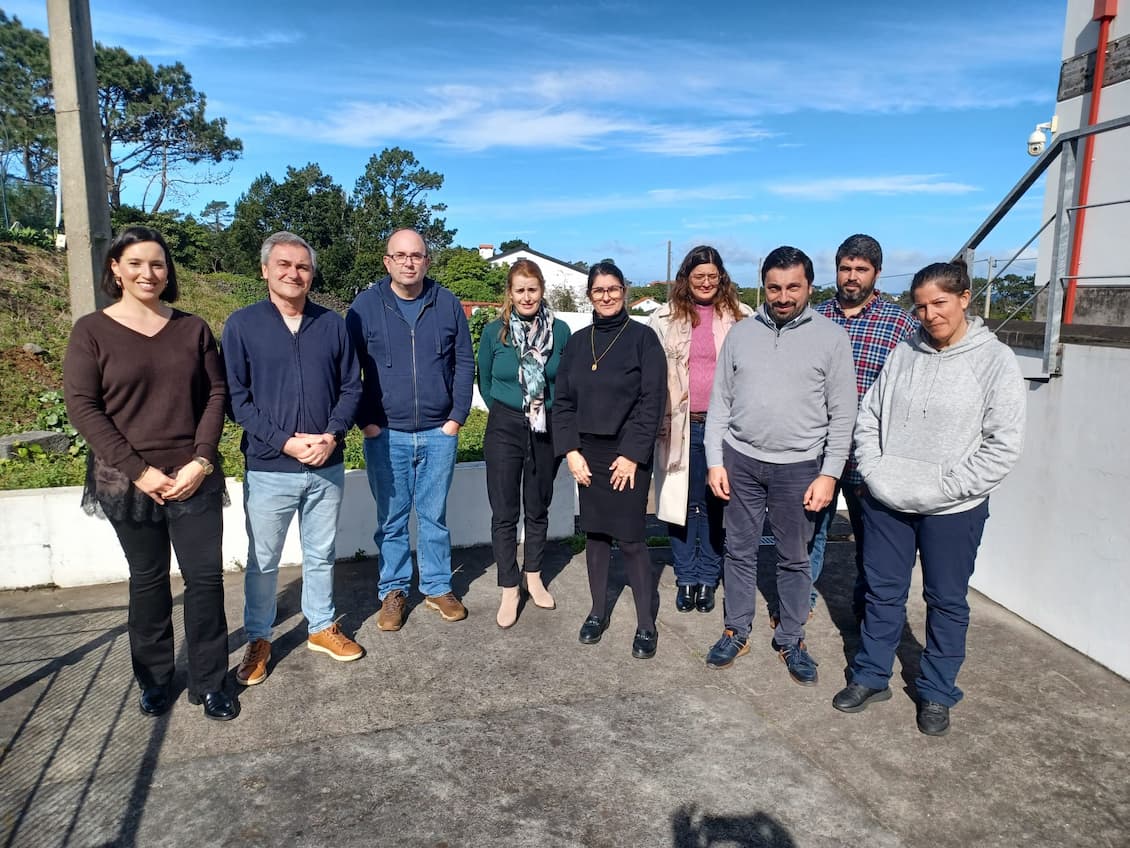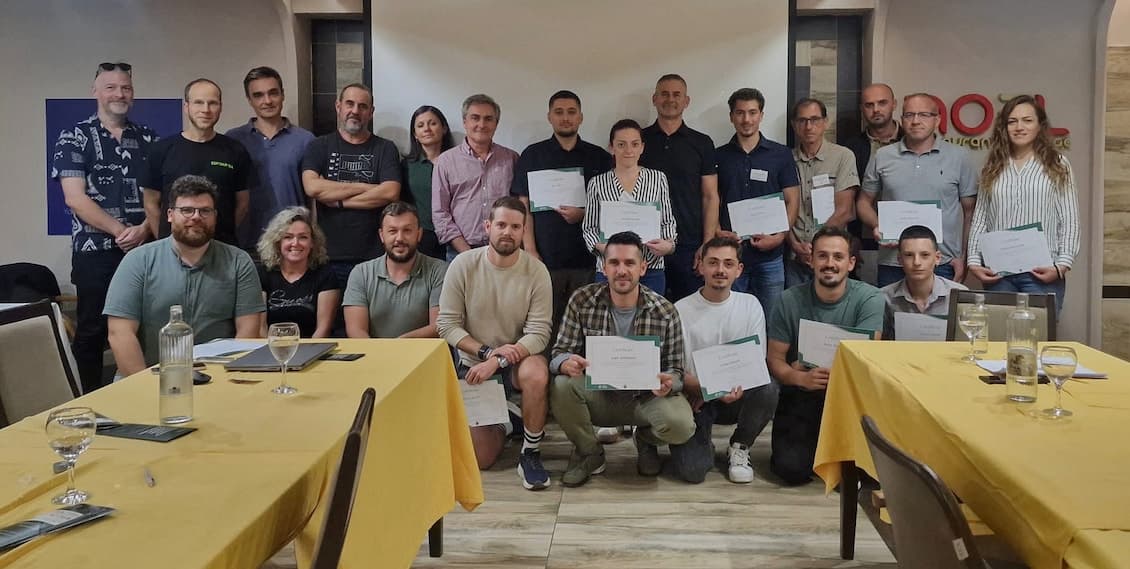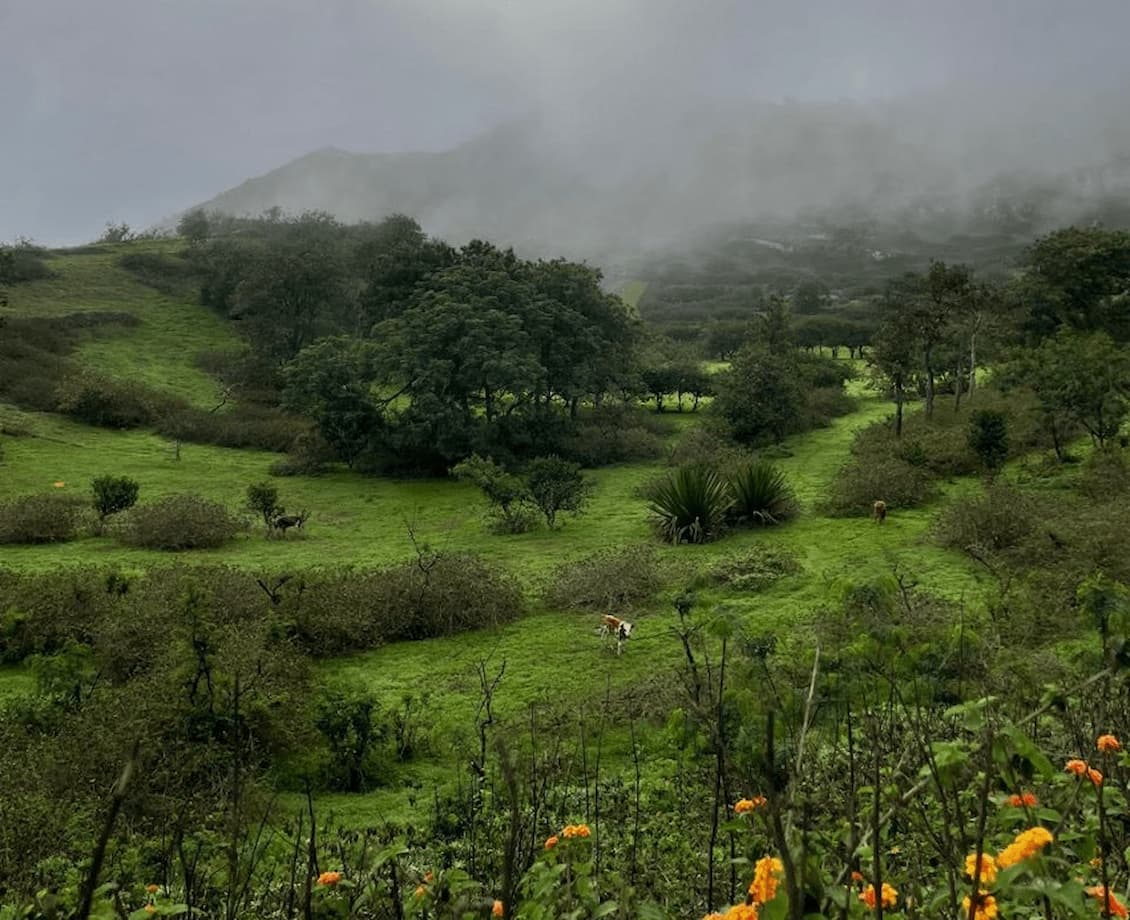
Our new partners of Biflores are just starting to coordinate our sixth and new pilot site of the Nature Returns network: the Island of Brava in Cabo Verde! Brava, the smallest inhabited island of Cabo Verde, is home to remarkable terrestrial biodiversity. Despite its small size and relative isolation, the island harbours some of the most diverse vegetation in Cabo Verde, boasting the highest total plant species richness with 239 species and the second-highest endemic floral species richness, with 25 officially documented taxa. However, Brava has historically received little attention regarding conservation initiatives. A comprehensive assessment using IUCN Red List criteria by Romeiras et al. revealed that 78% of Brava’s endemic plant species are threatened: 29.3% are Critically Endangered, 41.3% are Endangered, and 7.6% are Vulnerable.
Our new partners, Associação de Conservação da Biodiversidade – Biflores have been working on the ecological restoration of the Key Biodiversity Area (KBA) – Ribeira de Fajã de Agua since 2022. This KBA is one of Cabo Verde’s most ecologically significant landscapes, hosting several endemic and endangered species of fauna and flora. The distinct ecosystems within this important valley face severe pressure due to socio-environmental factors linking land abandonment and emigration to the alarming proliferation of exotic invasive species, degradation and erosion of soil, uncontrolled free grazing of goats and water scarcity. Biflores has been working on the ecological restoration of this KBA through managing and transforming invasive species, producing and applying biochar to restore degraded soils, supporting farmers and cattle breeders to transition from free grazing to semi-intensive controlled grazing and mobilizing atmospheric humidity for plant production and irrigation. Biflores aims to upscale their work by adapting the methodology of Nature Returns to our local context to unlock the potential of sustainable conservation business opportunities that arise from ecological restoration.
Biflores is a local association founded by Cape Verdean eco-citizens in Brava in 2016. Biflores’s mission is to conserve native and endemic biodiversity in Brava, based on local visions of development and sustainability. Our shared purpose is to blend local knowledge with the global scientific effort to protect biodiversity to ensure the continuity of the species that have evolved in the unique conditions of our island, Brava. Our approach is to promote a natural resource management system that simultaneously benefits human and non-human communities in Brava. We aim to use our living laboratory to share experiences and lessons learned across the islands of Cabo Verde to further community-based terrestrial and marine conservation. Through strong partnerships and a holistic vision, Biflores integrates terrestrial and marine conservation with the strengthening of rural livelihoods.
Addressing threats such as invasive species, uncontrolled free grazing, water scarcity and soil degradation at scale requires innovative economic incentives, strong partnerships and mechanisms to convert threats into opportunities. Inspired by the Ashoka Trust for Research on Ecology and Environment (ATREE – Bangalore) and The Shola Trust (Nilgiris, India), Biflores has implemented successful pilot projects to transform invasive species Lantana camara into useful artisanal products including furniture, decorative pieces and biochar and in mobilizing atmospheric humidity for ecological restoration via cloud-moisture harvesting. Biflores partners with local cattle breeders to support them in transitioning from free-grazing to controlled, semi-intensive grazing models that simultaneously provide ecosystemic and economic benefits.
Having demonstrated the potential of invasive species management, agroecological restoration and sustainable grazing as potential opportunities waiting to be scaled up, Biflores seeks to scale up its work through partnerships with the Nature Returns Initiative, supported by Connectology. This partnership aims to implement a structured methodology that integrates Conservation Standards with entrepreneurship development. It links threat analysis, opportunity mapping, business incubation, and measurable ecological outcomes, demonstrating internationally that viable nature-based businesses can reduce threats while generating income. Biflores seeks to apply the Conservation Standards to refine the site’s management plan, to rigorously assess threat levels, identify and scale-up already identified business opportunities, and design locally rooted solutions. Through Connectology’s Academy for Entrepreneurs, community members and Biflores staff will be trained to build enterprises that produces biochar, compost, mosquito repellent, organic fertilizer, other value-added artisanal goods from invasive biomass, as well as other non-timber forest products.
The project will start this summer and will be implemented across priority ecological zones and key biodiversity areas on Brava, in close collaboration with local communities, municipal and national authorities, with Biflores leading on-the-ground conservation and community engagement. It will involve:
- Continued Management Planning
- Continued threat Analysis & Call for Entrepreneurs
- Conservation Entrepreneurship Academy
- Incubation & Follow-Up Support (including seed funding for new eco-businesses)
- Monitoring, Evaluation & Adaptive Management
- Community Engagement & Education